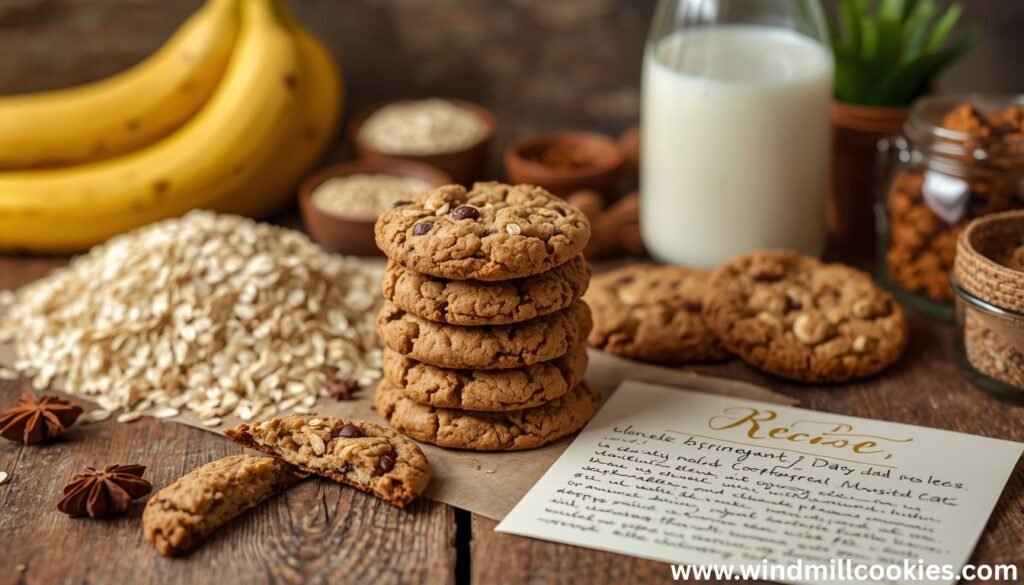

There’s something deeply comforting about oatmeal cookies baking in the oven. The warm aroma of toasted oats, cinnamon, and brown sugar feels like home, no matter where you are.
I started developing this vegan oatmeal cookie recipe during a phase when I wanted simple, plant-based treats that didn’t feel like a compromise, no fancy ingredients.
No hard-to-find egg replacers. Just pantry staples coming together to create cookies that taste classic, cozy, and genuinely satisfying.
What makes this recipe special is its balance. These cookies are soft in the center, lightly crisp around the edges, and packed with hearty oats.
They’re naturally dairy-free and egg-free, yet no one ever guesses they’re vegan. Whether you’re fully plant-based, baking for someone with dietary restrictions, or just craving an easy homemade cookie, this recipe fits beautifully into real life.

What Is a Vegan Oatmeal Cookies Recipe?
A vegan oatmeal cookie recipe is a plant-based version of traditional oatmeal cookies, made without eggs, butter, or dairy milk. Instead, it relies on vegan-friendly fats like coconut oil or vegan butter, plant-based milk, and natural binders such as flaxseed or applesauce.
Oatmeal cookies themselves have roots in early American baking, where oats were valued for their affordability and nutrition. Over time, they became a classic comfort cookie, often chewy, lightly spiced, and endlessly adaptable.
What sets vegan oatmeal cookies apart from conventional versions is the texture strategy. Without eggs, the recipe focuses on moisture balance and proper binding to achieve cookies that are still soft, chewy, and rich in flavor rather than dry or crumbly.
Why You’ll Love This Recipe
- Soft and chewy texture with perfectly toasted oats
- Naturally egg-free and dairy-free
- Made with simple pantry ingredients
- Easy one-bowl preparation
- Customizable with add-ins like chocolate chips or raisins
- Suitable for a vegan lifestyle and adaptable for gluten-free diets
- Great for meal prep and freezer-friendly

Ingredients Overview
Below is everything you’ll need, along with why each ingredient matters.
- Rolled oats – 2 cups: Use old-fashioned rolled oats for the best chewy texture. Avoid quick oats, which can make the cookies mushy.
- All-purpose flour – 1 cup: Provides structure. You can substitute gluten-free all-purpose flour if needed.
- Brown sugar – ¾ cup: Adds moisture and that classic caramel-like flavor oatmeal cookies are known for.
- Coconut sugar or white sugar – ¼ cup: Balances sweetness and helps with spreading.
- Coconut oil (melted) or vegan butter – ½ cup: Creates richness and tenderness. Vegan butter gives the cookies a more traditional flavor.
- Unsweetened plant-based milk – ¼ cup: Almond milk, soy milk, or oat milk all work well.
- Ground flaxseed – 1 tablespoon + 3 tablespoons water: Acts as a flax egg, replacing traditional eggs for binding.
- Vanilla extract – 2 teaspoons: Enhances overall flavor.
- Baking soda – 1 teaspoon: Helps the cookies rise slightly and spread evenly.
- Ground cinnamon – 1 teaspoon: Adds warmth and depth.
- Salt – ½ teaspoon: Balances sweetness.
Optional add-ins:
- Vegan chocolate chips – ½ cup
- Raisins or dried cranberries – ½ cup
- Chopped walnuts or pecans – ⅓ cup

Step-by-Step Instructions
Prepare the Flax Egg
To make the perfect binder for this vegan oatmeal cookie recipe, start with 1 tablespoon ground flaxseed and 3 tablespoons water. This simple combination replaces eggs beautifully and delivers reliable structure without affecting flavor.
Add the ground flaxseed and water to a small bowl. Stir well until fully combined. Let the mixture rest for 5 to 7 minutes at room temperature. During this time, it will thicken into a gel-like consistency, similar to raw egg whites.
This flax egg is essential for soft, chewy cookies. It locks in moisture, prevents crumbling, and supports even baking. Always prepare it first so it’s ready when you mix the wet ingredients.
Preheat the Oven
Before mixing the dough, preheat your oven to 350°F (175°C) for consistent, even baking. A fully heated oven is essential for achieving soft centers and lightly crisp edges in this vegan oatmeal cookie recipe.
Line a large baking sheet with 1 sheet of parchment paper or lightly grease it using 1 teaspoon of coconut oil. This prevents sticking and promotes even browning without extra fat.
Allow the oven to preheat for at least 10 minutes before baking. Placing cookies into a cold or partially heated oven can cause uneven spreading and a dense texture.
Proper preheating ensures the cookies bake evenly, rise gently, and develop a balanced chew with rich, warm flavor in every bite.

Mix Wet Ingredients
In a large mixing bowl, add ½ cup melted coconut oil or vegan butter, ¾ cup brown sugar, and ¼ cup coconut sugar. Whisk until smooth and glossy. This step builds deep flavor and creates a rich, moist cookie base.
Pour in ¼ cup unsweetened plant-based milk, 2 teaspoons vanilla extract, and the prepared flax egg (1 tablespoon ground flaxseed + 3 tablespoons water). Stir gently until fully combined and creamy.
Mixing the wet ingredients thoroughly is key tosoft, chewy vegan oatmeal cookies. A well-emulsified mixture helps the dough hold together, improves texture, and ensures even sweetness in every baked cookie.
Combine Dry Ingredients
In a separate bowl, add 1 cup all-purpose flour, 2 cups rolled oats, 1 teaspoon baking soda, 1 teaspoon ground cinnamon, and ½ teaspoon salt. Whisk gently until evenly blended. This step ensures balanced flavor and consistent texture throughout the dough.
Properly combining dry ingredients prevents uneven rise and eliminates pockets of baking soda. The oats provide a hearty chew, while flour gives structure and stability to this vegan oatmeal cookie recipe.
Once mixed, gradually add the dry ingredients to the wet mixture. Stir just until no dry spots remain. Avoid overmixing, as it can lead to dense, tough cookies instead of soft, tender results.
Fold in Add-Ins
Once the dough is fully mixed, gently fold in your add-ins for extra flavor and texture. Add ½ cup vegan chocolate chips, ½ cup raisins or dried cranberries, or ⅓ cup chopped walnuts or pecans, depending on your preference. Use a spatula and light strokes to avoid overworking the dough.
This step personalizes your vegan oatmeal cookies recipe while keeping the texture soft and chewy. Even distribution ensures every cookie bakes with balanced sweetness and satisfying bites.
Avoid pressing or stirring too aggressively. Gentle folding protects the dough structure, prevents spreading issues, and keeps the cookies tender with well-defined flavors in every batch.

Scoop the Dough
Using a cookie scoop or tablespoon, portion 2 tablespoons of cookie dough per cookie for even size and consistent baking. Uniform scoops ensure each cookie spreads evenly and finishes at the same time.
Place the dough balls onto the prepared baking sheet, leaving 2 inches of space between each one. This spacing allows proper airflow and prevents cookies from merging as they bake.
For thicker, bakery-style vegan oatmeal cookies, keep the dough rounded. If you prefer slightly flatter cookies, gently press the tops with your fingers.
Avoid compacting the dough too tightly, as light handling helps maintain soft centers, chewy texture, and balanced structure once baked.
Bake
Place the baking sheet on the center rack of the preheated oven set to 350°F (175°C). Bake the cookies for 10 to 12 minutes, watching closely during the final minutes for the best results.
The edges should look set and lightly golden, while the centers remain soft and slightly underbaked. This timing is key for achieving tender, chewy vegan oatmeal cookies rather than dry ones.
Avoid overbaking, as the cookies will continue to firm up while cooling. Remove the tray promptly once done. Proper baking time locks in moisture, enhances oat flavor, and delivers perfectly balanced texture in every bite.
Cool

After baking, remove the tray from the oven and let the cookies rest on the baking sheet for 5 minutes. This short cooling period allows the structure to set without drying out the centers.
Using a spatula, transfer the cookies to a wire rack to cool completely. No additional ingredients are needed at this stage, but proper cooling is essential for the final texture. The cookies will firm up slightly while staying soft and chewy inside.
Avoid moving them too early, as hot vegan oatmeal cookies are delicate. Controlled cooling prevents breakage, improves shape, and enhances flavor development for a perfectly finished batch.
Expert Tips for Best Results
Use 2 cups rolled oats for the best chewy texture. Quick oats absorb moisture too fast and can make cookies dense. Measure 1 cup of all-purpose flour accurately to avoid dryness and uneven baking.
For richer flavor, choose ½ cup vegan butter instead of oil. If the dough feels dry, add 1 to 2 tablespoons plant-based milk to restore moisture and balance.
Always bake at 350°F (175°C) and remove cookies when centers look slightly soft. Overbaking causes hard edges. Let cookies cool for 5 minutes before moving.
These small adjustments guarantee soft centers, stable structure, and bakery-quality vegan oatmeal cookies every time.
- For extra chewy cookies, slightly underbake them and let them firm up while cooling.
- Measure flour correctly by spooning it into the cup and leveling off. Too much flour leads to dry cookies.
- If the dough feels too dry, add 1–2 tablespoons of plant-based milk.
- Use room-temperature ingredients for even mixing.
- Let the dough rest for 10 minutes to allow oats to hydrate fully.

Variations & Substitutions
This vegan oatmeal cookie recipeis highly adaptable. For a gluten-free option, use 1 cup gluten-free all-purpose flour and cecups gluten-free rolled oats. The texture remains soft and chewy.
To make oil-free cookies, replace ½ cup of coconut oil with ½ cup of unsweetened applesauce. The cookies will be tender but slightly less crisp.
Add flavor twists like ½ teaspoon ground nutmeg, ½ teaspoon cardamom, or 1 teaspoon orange zest for a unique spin.
For extra protein, fold in 2 tablespoons hemp seeds or ⅓ cup chopped almonds.
Chocolate lovers can add ½ cup vegan chocolate chips, while dried fruit fans can use ½ cup raisins or cranberries, making every batch customizable and irresistible.
- Gluten-free option: Use certified gluten-free oats and gluten-free all-purpose flour in a 1:1 ratio.
- Oil-free version: Replace coconut oil with unsweetened applesauce (½ cup), though cookies will be softer and less crisp.
- Low-sugar version: Reduce sugar by ¼ cup and add 1 tablespoon of maple syrup for moisture.
- Flavor twists: Add orange zest, nutmeg, or cardamom for a unique spin.
- Protein boost: Stir in 2 tablespoons of hemp seeds or chopped almonds.
Storage & Make-Ahead Instructions
- Room temperature: Store cookies in an airtight container for up to 4 days.
- Refrigeration: Keeps well for up to 7 days when chilled.
- Freezing baked cookies: Freeze fully cooled cookies for up to 3 months. Thaw at room temperature.
- Freezing dough: Scoop dough balls and freeze. Bake directly from frozen, adding 1–2 minutes to baking time.
Frequently Asked Questions (FAQ)
Are vegan oatmeal cookies healthy?
They can be, especially when made with whole oats, moderate sugar, and healthy fats like coconut oil.
Can I make vegan oatmeal cookies without flaxseed?
Yes, you can use ¼ cup unsweetened applesauce or mashed banana instead.
Why are my vegan oatmeal cookies dry?
Too much flour or overbaking are the most common causes. Measure carefully and remove cookies while centers are soft.
Can I use quick oats instead of rolled oats?
You can, but the texture will be softer and less chewy.
Do vegan oatmeal cookies spread differently?
Yes, they often spread slightly less. Flatten dough balls gently before baking if needed.
Can I make this vegan oatmeal cookie recipe gluten-free?
Absolutely. Use gluten-free oats and gluten-free flour.
How do I keep vegan cookies soft?
Store them in an airtight container with a slice of bread to retain moisture.
Final Thoughts / Serving Suggestions
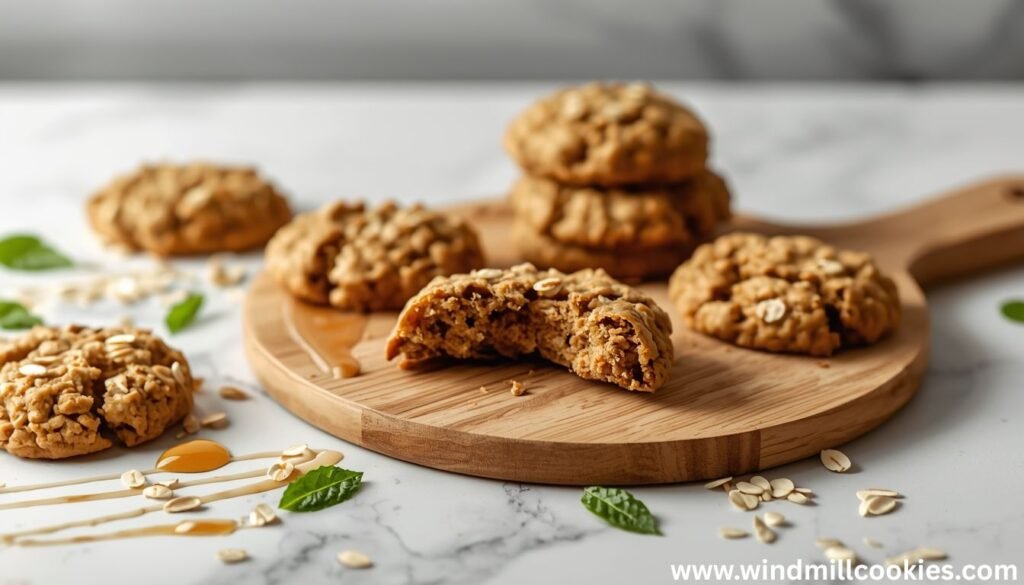
This vegan oatmeal cookie recipe proves that plant-based baking doesn’t mean sacrificing flavor or texture. These cookies are perfect with a cup of coffee, tucked into lunchboxes, or served warm with a glass of almond milk.
I love making a batch on quiet weekends and freezing half for busy days when a homemade treat feels like a small act of self-care.
Whether you keep them classic or dress them up with chocolate and nuts, these cookies are meant to be shared, enjoyed, and baked again and again. If you’re looking for a dependable, comforting vegan cookie, this recipe belongs in your regular rotation.