

Some of my favourite recipes are born out of quiet kitchen experiments, the kind where you’re trying to make a classic treat just a little better for everyday life. That’s exactly how this oat flour chocolate chip cookies recipe came to be. I wanted a cookie that felt indulgent and nostalgic, but also used simple, wholesome ingredients I already had on hand.
Oat flour has always been one of my go-to pantry staples. It’s naturally gluten-free, mildly sweet, and gives baked goods acosyy, homemade texture.
After a few test batches (and plenty of taste-testing), these cookies became a regular in my kitchen. They’re soft in the centre, lightly crisp on the edges, and packed with rich chocolate flavour without tasting “healthy.”
If you’re looking for an easy, reliable oat flour cookie recipe that doesn’t require fancy techniques or hard-to-find ingredients, you’re in the right place.

What Is an Oat Flour Chocolate Chip Cookies Recipe?
An oat flour chocolate chip cookie recipe is a variation of the classic chocolate chip cookie, made with oat flour instead of all-purpose flour. Oat flour is made from finely ground oats and offers a slightly nutty flavour and tender crumb.
Unlike traditional cookies, oat flour cookies tend to be softer and more delicate. They’re ideal for anyone looking for gluten-free chocolate chip cookies without using processed flour blends.
How These Cookies Are Different
- Made with 100% oat flour, not a gluten-free mix
- Naturally gluten-free when using certified gluten-free oats
- Softer texture with a subtle flavour
- Easy to adapt for dairy-free or refined sugar–free diets
This recipe keeps things simple while delivering bakery-style results at home.

Why You’ll Love This Recipe
- Soft, chewy centres with lightly crisp edges
- Naturally gluten-free and easy to customise
- One-bowl, beginner-friendly method
- Rich chocolate flavour without being overly sweet
- Perfect for everyday baking or special occasions
Ingredients Overview
Here’s everything you’ll need to make these oat flour chocolate chip cookies, along with why each ingredient matters.
- Oat flour – 2 cups (240 g): Provides structure and a mild, naturally sweet flavour. Use store-bought or finely ground homemade oat flour.
- Baking soda – ½ teaspoon: Helps the cookies rise and spread properly.
- Fine sea salt – ½ teaspoon: Balances sweetness and enhances chocolate flavour.
- Unsalted butter – ½ cup (113 g), softened: Adds richness and classic cooking flavour.
Substitution: Dairy-free butter or coconut oil. - Brown sugar – ¾ cup (150 g): Creates moisture and chewiness with a caramel-like taste.
Substitution: Coconut sugar. - Granulated sugar – ¼ cup (50 g): Helps with crisp edges and balanced sweetness.
- Egg – 1 large, room temperature: Binds the dough and adds structure.
Vegan option: Flax egg (1 tbsp ground flax + 2½ tbsp water). - Vanilla extract – 1 teaspoon: Enhances overaflavourvor.
- Chocolate chips – 1 cup (170 g): Use dark, semi-sweet, or dairy-free chocolate chips.

Step-by-Step Instructions
Prepare the Oven
Start by preheating the oven to 350°F (175°C). This step is essential for even baking and a perfect cookie texture. A fully heated oven helps the oat flour chocolate chip cookies set quickly, creating soft centres and lightly crisp edges.
Place the oven rack in the centre position to ensure balanced heat circulation. Avoid baking too close to the top or bottom, as oat flour cookies can brown unevenly.
Line 2 baking sheets with parchment paper to prevent sticking and promote uniform baking. No greasing is required.
Oven setting: 350°F (175°C)
Bake time: 10–12 minutes per batch
Let the oven heat for at least 10 minutes before baking for the best results.

Mix Dry Ingredients
In a medium mixing bowl, add 2 cups (240 g) oat flour, ½ teaspoon baking soda, and ½ teaspoon fine sea salt. These dry ingredients create the foundation of soft, chewy oat flour chocolate chip cookies and ensure even structure in every bite.
Whisk the mixture thoroughly for 20–30 seconds. This step evenly distributes the leavening agent, preventing dense spots and uneven rise during baking. Proper mixing also enhances flavour balance and improves overall cookie texture.
Use finely ground oat flour for the best results. Lumpy or coarse flour can affect moisture absorption and cause crumbly cookies. Once combined, set the bowl aside and prepare the wet ingredients for the next step.
Cream Butter and Sugars
In a large mixing bowl, add ½ cup (113 g) unsalted butter, softened, ¾ cup (150 g) brown sugar, and ¼ cup (50 g) granulated sugar. This combination is key to achieving soft centres, chewy texture, and rich cookie flavour.
Using a hand mixer or sturdy whisk, cream the butter and sugars together for 2–3 minutes until the mixture looks light, fluffy, and slightly pale. This process traps air, helping the oat flour chocolate chip cookies bake evenly and spread just right.
Make sure the butter is at room temperature, not melted. Proper creaming improves moisture retention and delivers bakery-style results in every batch.

Add Wet Ingredients
Once the butter and sugars are light and creamy, add 1 large egg (room temperature) and 1 teaspoon vanilla extract to the bowl. These wet ingredients bind the dough and enhance the rich, classic cookie flavour.
Mix on low speed until fully combined and smooth. Scrape down the sides of the bowl to ensure even blending. A well-mixed base creates a consistent texture and prevents dry patches in the final dough.
Using a room-temperature egg is essential for proper emulsification. Cold eggs can cause the butter to seize, affecting dough consistency. This step sets the stage for soft, chewy oat flour chocolate chip cookies with balanced moisture and structure.

Combine Wet and Dry
Gradually add the prepared dry mixture, 2 cups (240 g) oat flour, ½ teaspoon baking soda, and ½ teaspoon fine sea salt, into the bowl of wet ingredients. Mix on low speed or gently fold with a spatula until just combined. This careful blending prevents overworking the dough and keeps the cookies soft and tender.
The dough should look thick, slightly sticky, and well hydrated. Avoid overmixing, as oat flour absorbs moisture quickly and can lead to dense cookies if handled too much.
Once no dry streaks remain, stop mixing immediately. This step locks in moisture and ensures evenly textured oat flour chocolate chip cookies with a perfectly balanced crumb.
Scoop the Dough
Using a cookie scoop or tablespoon, portion 1½ tablespoons of cookie dough per scoop. This size ensures even baking and a consistent cookie texture across the entire batch. Uniform portions help the oat flour chocolate chip cookies spread evenly and finish at the same time.
Place each dough scoop onto the prepared baking sheet, leaving 2 inches of space between cookies. This spacing allows proper airflow and prevents cookies from merging while baking.
For thicker cookies, gently roll the dough into loose balls without compacting. Avoid pressing the dough flat, as oat flour dough sets quickly in the oven. Proper scooping guarantees soft centres and balanced edges.
Bake
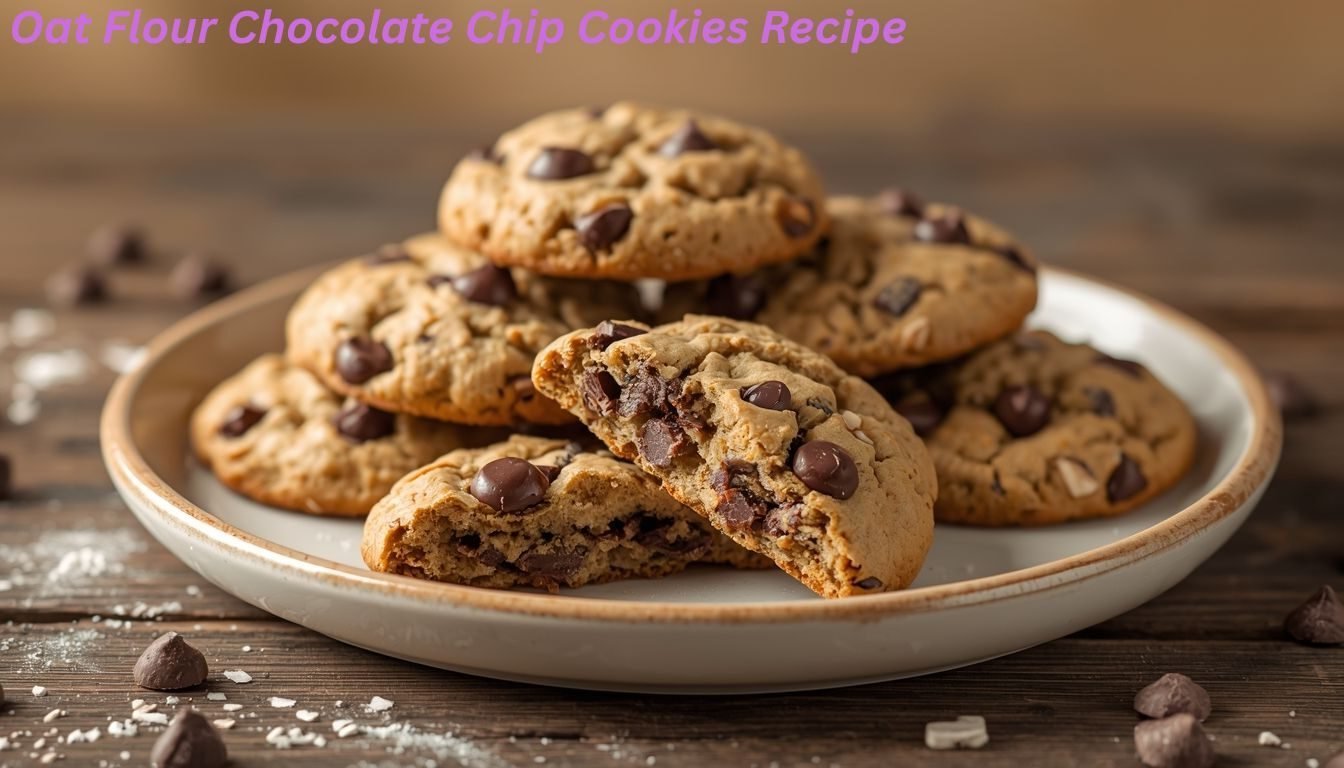
Place the baking sheet in the preheated oven set to 350°F (175°C). Bake the cookies for 10–12 minutes, watching closely as they bake. The edges should look set and lightly golden, while the centres remain soft and slightly underbaked. This timing is key for achieving chewy oat flour chocolate chip cookies.
Avoid overbaking, as oat flour continues to firm up during cooling. Remove the cookies from the oven once they puff slightly and show small cracks on top.
Let the cookies rest on the baking sheet for 5 minutes before transferring. This step helps them hold shape and develop the perfect texture.
Cool
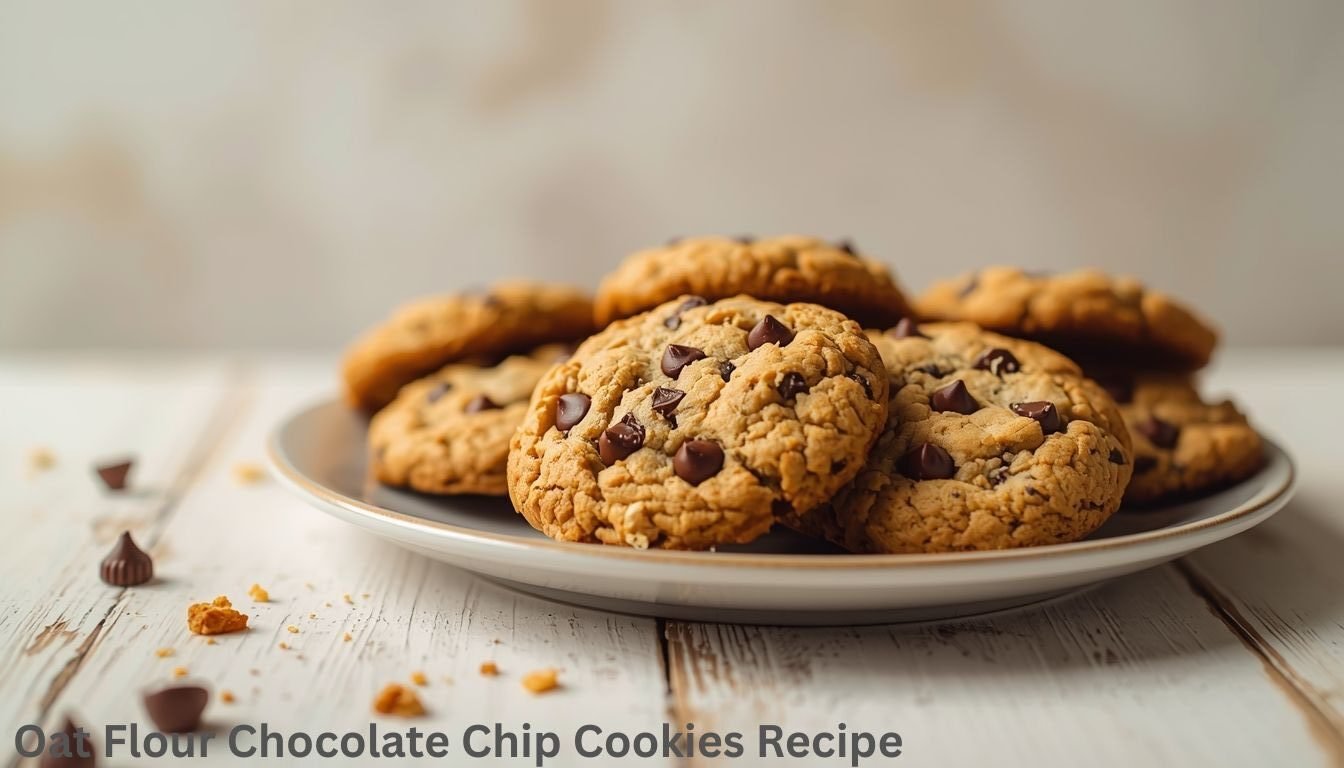
Once baked, remove the cookies from the oven and let them rest on the baking sheet for 5 minutes. This short cooling time allows the structure to set, preventing the soft oat flour chocolate chip cookies from breaking apart when moved.
Using a spatula, transfer the cookies, about 18–20 cookies per batch, to a wire cooling rack. Allow them to cool completely for 10–15 minutes. Proper airflow helps excess steam escape, locking in chewy centres and lightly crisp edges.
Avoid stacking or storing cookies while warm. Oat flour retains heat longer than wheat flour, and rushing this step can lead to a soggy texture. Cooling fully ensures perfect flavour, texture, and clean presentation.
Expert Tips for Best Results
Use 2 cups (240 g) finely ground oat flour for a smooth, bakery-style texture. Coarse flour can cause dry or crumbly cookies. Always measure accurately to maintain proper moisture balance.
Ensure ½ cup (113 g) butter is softened, not melted. Soft butter creams better with ¾ cup (150 g) brown sugar, creating soft centres and rich flavour. Melted butter can lead to excessive spreading.
Do not overbake. Remove cookies at 10–12 minutes when centres look slightly underdone. They firm up as they cool.
If the dough feels sticky, chill it for 15–20 minutes. This improves the structure and produces evenly shaped oat flour chocolate chip cookies.
Use finely ground oat flour for the best texture. Coarse flour can make cookies crumbly.
Do not overbake Oat flour cookies firm up as they cool.
Chill the dough for 20 minutes if your cookies spread too much.
Measure oat flour correctly by spooning it into the measuring cup and levelling it off.
Let cookies rest before moving them; they’re delicate when warm.

Variations & Substitutions
Customise your oat flour chocolate chip cookies with flavour variations. Add ½ teaspoon cinnamon or ¼ teaspoon nutmeg for warm spice.
Fold in ½ cup (60 g) chopped walnuts or pecans for crunch. Swap 1 cup (170 g) of chocolate chips with white or dark chocolate chunks for different tastes.
For dietary adaptations, use 1 flax egg (1 tbsp ground flax + 2½ tbsp water) instead of 1 large egg for vegan cookies.
Replace ½ cup (113 g) butter with dairy-free butter or coconut oil for a dairy-free version. Swap sugars with ¾ cup (150 g) of coconut sugar to reduce refined sugar. These substitutions maintain texture, chewiness, and flavour without compromise.

Flavor Variations
- Add ½ teaspoon of cinnamon for a warm spice
- Mix in chopped walnuts or pecans
- Use white chocolate chips or dark chocolate chunks
Dietary Adaptations
- Vegan: Use flax egg and dairy-free butter
- Dairy-Free Cookies: Replace butter with plant-based butter or coconut oil
- Refined Sugar-Free: Use coconut sugar or maple sugar
This recipe adapts beautifully without sacrificing texture.
Storage & Make-Ahead Instructions
Room Temperature: Store baked cookies in an airtight container for up to 3 days.
Refrigeration: Cookie dough can be refrigerated for up to 48 hours. Let it sit at room temperature for 10 minutes before baking.
Freezing:
- Freeze dough balls for up to 3 months
- Bake directly from frozen, adding 1–2 minutes to bake time
- Freeze-baked cookies for up to 2 months
Frequently Asked Questions
Are oat flour chocolate chip cookies gluten-free?
Yes, as long as you use certified gluten-free oat flour or oats.
Can I make oat flour at home?
Absolutely. Blend rolled oats in a high-speed blender until very fine.
Why are my oat flour cookies crumbly?
This usually happens if there’s too much flour or not enough fat. Measure carefully and avoid overbaking.
Can I use maple syrup instead of sugar?
Liquid sweeteners change the dough consistency. For best results, stick with dry sweeteners.
Do oat flour cookies spread?
They spread slightly but stay thick. Chilling the dough helps control the spread.
Can I make these cookies egg-free?
Yes, a flax egg works well in this recipe.

Final Thoughts & Serving Suggestions
This oat flour chocolate chip cookies recipe proves that gluten-free baking can be simple, comforting, and incredibly delicious. These cookies are perfect with a cup of coffee, packed into lunchboxes, or served warm with a glass of milk.
I love making a double batch and freezing half for busy weeks. It’s like having homemade treats on demand. Whether you’re baking for dietary needs or just want to try something new, these cookies arcrowd-pleasing favouriteeite.
If you try this recipe, don’t be surprised if it becomes a regular in your baking rotation.